Transplant patients and families join with Intermountain Primary Children’s Hospital Transplant for National Donate Life Month to raise awareness about critical need for organ donation for children
(PRUnderground) April 2nd, 2026
The need for life-saving organ transplants for children in Utah and across the nation has never been greater. More than 2,000 children in the United States are currently awaiting an organ for transplantation.
As National Donate Life Month kicks off in April, Utah pediatric transplant patients and their families are joining with clinicians from the Intermountain Health Primary Children’s Transplant Program – the only pediatric transplant program in the Intermountain West – to raise awareness about the vital need for organ donation for children – while celebrating donors and children who have been transplanted.
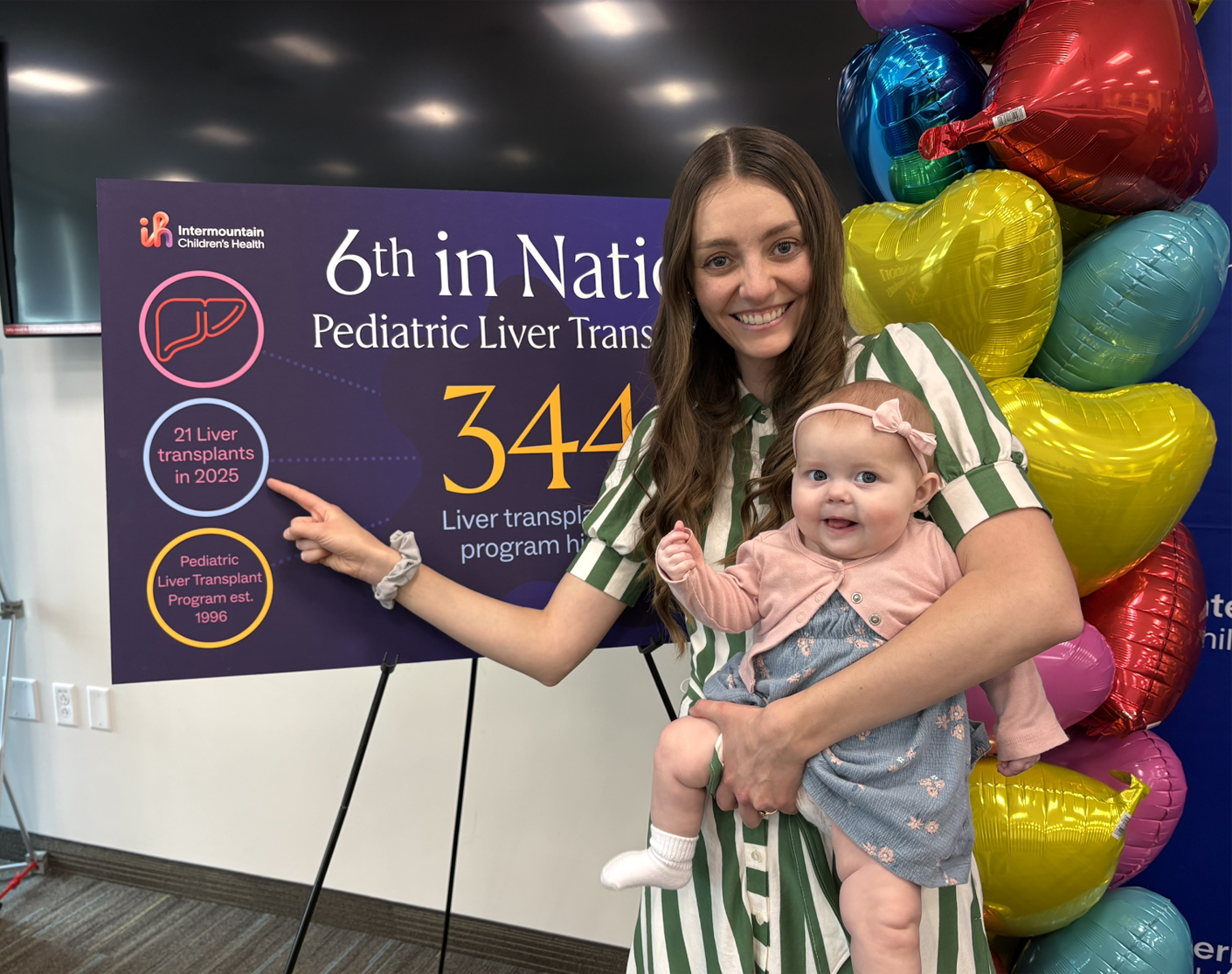
The Intermountain Primary Children’s Transplant Program, in partnership with University of Utah Health, had a record year in 2025, performing 18 pediatric heart transplants (third most in the nation) and 21 pediatric liver transplants (sixth most in the nation).
The Intermountain Primary Children’s Transplant Program performs heart, liver, and kidney transplants. The program has been performing heart transplants since 1991 and liver transplants since 1996 and has one of the most successful pediatric transplant programs in the nation. It has performed 350 liver transplants and 267 heart transplants to date.
“Our program is nationally recognized for high‑volume pediatric heart and liver transplants combining advanced innovation – including a robust VAD (ventricular assist device) and living donor liver program – with exceptional outcomes, rigorous quality oversight, and deeply family‑centered care,” said Jean Botha, MD, an Intermountain Health transplant surgeon and medical director of the Intermountain Primary Children’s Hospital Transplant Program.
While improved technology, innovations, and enhanced care have led to some of the top clinical outcomes in the nation, Dr. Botha says the greatest challenge remains the shortage of donor organs – especially for children, who often require size‑matched organs.
More than 100,000 people in the United States are waiting for a life‑saving organ transplant, yet children account for only about 2 percent of the national waiting list. Despite their small numbers, pediatric patients – especially children under five years old – face the highest risk of death while waiting for a transplant compared to any other age group, largely due to the scarcity of size‑matched organs.
Because of that, Dr. Botha says more organs are desperately needed to help children in need. In some cases, those organs can come from living adult donors.
“Pediatric transplantation saves lives, but it depends entirely on the generosity of donors and families who choose to give the gift of life,” said Dr. Botha. “By learning about organ donation, registering as a donor, and sharing that decision with loved ones, each of us can help ensure that more children have the chance to grow up, thrive, and live full lives.”
That generosity helped the saves the lives of young Ellie Farmer from Provo, and Alonzo “Lonnie” Whitney, from Saratoga Springs, who both received live-saving organ transplants at Intermountain Primary Children’s Hospital.
Ellie was just seven-month-old when she received part of her aunt’s liver on December 29, 2025. Her aunt, Alyssa Rhoades, was a living donor match for Ellie.
Ellie had a rare condition called biliary atresia that was discovered when she was three months old.
“At that time, she went through an initial surgery called a Kasai procedure, which in some infants with her condition fixes their bile-duct-drainage-problem. This was not the case for Ellie,” said her mom, Jadree. “We were in the hospital several days to weeks at a time off-and-on during the months of August through October due to ascites (abnormal liver enzymes), and lack of weight gain. On November 17, Ellie was listed on the national liver donor list while we simultaneously did workups in hopes of finding a living donor match.”
Today, Ellie is doing well and her future is bright, says her mom.
“We’re almost three months post-transplant, and Ellie is happier and better than ever,” said Jadree Farmer. “She recently gained enough weight that we were able to remove her feeding tube, which provided supplemental nutrition at nighttime for six months. Ellie is hitting more developmental milestones since her transplant – from sitting on her own to taking interest in solid food to crawling recently.”
“Organ donors literally save lives. Without her liver transplant, Ellie likely would’ve died within the first year or two of her life,” said Jadree. “Instead, she’s happy, loud, silly, and cute as can be, with her whole life ahead of her. One donor has the potential to save many lives. In our family’s case, one donor not only saved our Ellie, but is now back to living a normal life herself.”
Alonzo “Lonnie” Whitney received his heart transplant on Dec. 7, 2024, at Intermountain Primary Children’s Hospital, when he was just 6 ½ weeks old.
He was born with a condition called hypoplastic left heart syndrome (HLHS), a critical congenital heart defect where the left side of the heart is underdeveloped, requiring immediate care at birth, including a heart transplant.
“We’re so grateful for organ donation and the ultimate gift of life,” said Alonzo’s mom, Sara. “We struggled knowing that the only way for our son to live was for someone’s else’s child to pass. We feel immense gratitude that in their moment of greatest suffering they were willing to help other children in need. We want everyone to see the miracle that Alonzo is and know that it’s because of organ donation that he is now thriving and loving life with his brother and sister. We’re thankful every day for that gift.”
Sharon Chen, MD, a cardiologist at University of Utah Health and Intermountain Health Primary Children’s Hospital and medical director of the pediatric heart transplant program, said it’s a team approach and dedication to patients and families that drives the success of the pediatric heart transplant program at Intermountain Primary Children’s Hospital.
“Our clinical outcomes are excellent,” she said. “Not only do we do consistently exceed national averages for heart transplant survival, but we perform better than what is expected for pediatric heart transplant programs similar in size and complexity to ours. That’s a result of this entire team of cardiologists, surgeons, advanced practice providers, nurses, coordinators, social workers, pharmacists, hospital administrators, and others who care for our patients throughout the hospital. It’s an entire team.”
Zach Kastenberg, MD, pediatric liver transplant surgeon at University of Utah Health and Intermountain Health Primary Children’s Hospital, agrees.
“Today, we’re celebrating a huge milestone – 21 liver transplants performed in 2025,” he said. “This doesn’t happen without an entire hospital behind it. There’s not a corner of Primary Children’s Hospital that doesn’t support our liver transplant patients and families. We’re very grateful for their support.”
April is National Donate Life Month, a time to raise awareness about organ, eye, and tissue donation, and encourage organ donation registration. It’s also a time to honor organ donors who have saved lives. Established in 2003, this national awareness campaign highlights the need for donors while celebrating organ transplant recipients. For more information, please see https://intermountainhealthcare.org/childrens-health/transplant.
About Intermountain Health
Headquartered in Utah with locations in six states and additional operations across the western U.S., Intermountain Health is a nonprofit system of 34 hospitals, approximately 400 clinics, medical groups with some 4,600 employed physicians and advanced care providers, a nonprofit health plan called Select Health with more than one million members, and other health services. Helping people live the healthiest lives possible, Intermountain is committed to improving community health and is widely recognized as a leader in transforming healthcare by using evidence-based best practices to consistently deliver high-quality outcomes at sustainable costs. For up-to-date information and announcements, please see the Intermountain Health newsroom at https://news.intermountainhealth.org/. For more information, see intermountainhealth.org/ or call 801-442-2000.
The post Intermountain Primary Children’s Transplant Program Raises Awareness on Critical Organ Donation Need first appeared on
Original Press Release.
