
RTZEN, a family-owned wrought iron décor brand producing hand-forged home hardware since 1997, has released guidance on curtain hardware use in response to the U.S. Energy Information Administration's Winter Fuels Outlook published October 6, 2026. The forecast projects that households primarily using heating oil could spend approximately 21 percent more this winter than last, with average expenditures of about $2,115, while households heated by electricity face forecast costs roughly 4 percent higher.
With those figures prompting renewed attention to low-cost ways of managing household heat, RTZEN is pointing homeowners toward established guidance from the U.S. Department of Energy. DOE advises opening curtains during winter days to admit solar warmth and closing them at night to reduce the effect of cold windows. DOE also notes that roughly 30 percent of a home's heating energy can be lost through windows, which places window coverings within broader winter weatherization discussions.
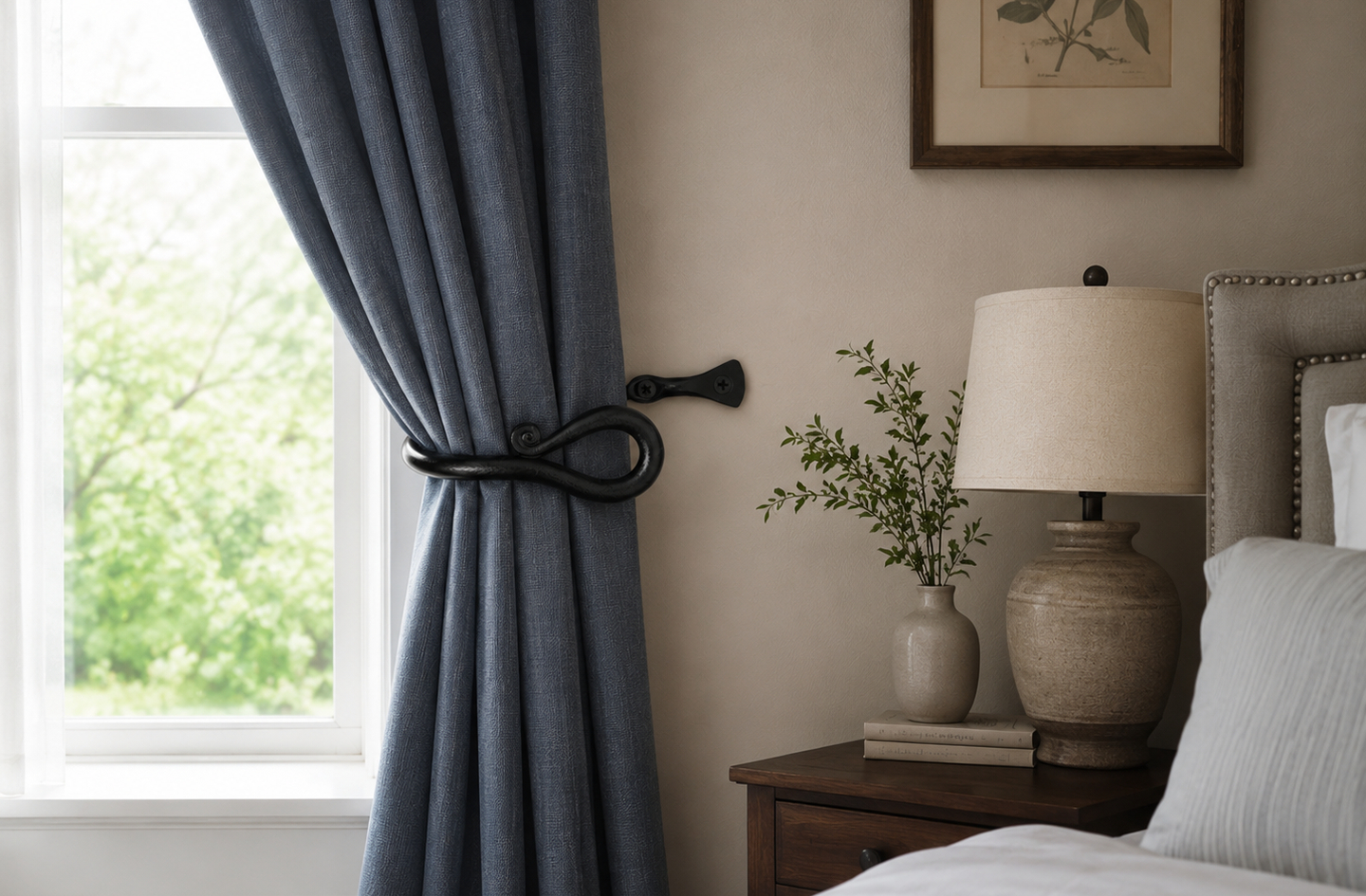
RTZEN emphasizes that the curtain itself functions as the window-management device, while hardware such as holdbacks supports the curtain's open position during daylight hours. The company states clearly that it does not claim curtain holdbacks produce any specific dollar or percentage energy saving, noting that actual results depend on the curtain and window combination, climate, home efficiency, and usage.
The company's attention centers on practical hardware questions. Curtains need two genuinely usable positions in winter: fully open during sunny periods and fully closed after dark. Heavier blackout, lined, and thermal-style curtains place greater demands on projection, wall anchoring, and hardware strength, a distinction addressed in the RTZEN Heavy Duty Curtain Hardware Guide. Placement also matters, because hardware positioned incorrectly can leave fabric partially covering the glazing even when curtains are pulled aside.
"The cost figures are a reminder that daily habits around windows still matter, and the curtain is the part doing the work there," said Rami Abramson, spokesperson for RTZEN. "Our role is narrower and more practical. When fabric is heavy and needs to move twice a day, the hardware has to be anchored properly and placed so the curtain actually clears the glass."
To help homeowners apply the daily routine DOE recommends, RTZEN has consolidated its existing curtain content. The RTZEN Curtain Holdbacks Guide explains how hardware supports full daytime opening and clean nighttime closure, while the RTZEN Guide to Curtain Holdback Placement addresses both vertical height and distance from the window frame. The common height rule places holdbacks at roughly one third of the curtain's length, with the side position set at least one inch beyond the frame, and farther for fuller curtains.
"Decorative holdbacks should not become permanent restraints in winter," Abramson added. "If curtains need to close at night, the arrangement should let that happen without a struggle."
RTZEN, operated by Iron-Craft and established in 1997, specializes in hand-forged wrought iron products for home and office use, including curtain holdbacks, hooks, hangers, planter hooks, and decorative accents. The brand is rooted in traditional blacksmithing techniques and builds its products around craftsmanship, durability, and adaptable style, backed by a Lifetime Warranty.
###
For more information about RTZEN, contact the company here:
RTZEN
Rami Abramson
info@rtzen-decor.com
16192 Coastal Highway Lewes
Delaware 19958
USA
