
The Real Reason Basement Waterproofing Systems Fail: Poor Drainage Design Explained
Albertson, United States - January 15, 2026 / A.M. Shield Waterproofing Corp. /
Basement waterproofing protects your home, but it only works when the surrounding drainage is right. Too often systems fail not because the membrane or repair was poor, but because water keeps finding a way in. This guide explains why waterproofing fails, with a clear focus on drainage design what goes wrong, practical solutions, and preventive steps you can take (or ask a pro to do). We’ll cover how hydrostatic pressure works, why both exterior and interior drainage matter, and when it’s time to call an expert.
What Are the Main Causes of Basement Waterproofing Failure?
 Waterproofing failures usually trace back to a few predictable issues. Knowing these helps homeowners prioritize fixes that actually work and avoid repeating the same problems.
How Does Poor Drainage Lead to Basement Leaks and Waterproofing Failure?
When water isn’t moved away from the foundation, it pools against the walls and finds weak spots. Poor grading, clogged gutters, or broken exterior drains let water collect at the foundation line. Over time that standing water forces its way through seals and membranes, causing leaks, mold, and even structural damage.
What Role Does Hydrostatic Pressure Play in Basement Water Intrusion?
Hydrostatic pressure is simply the force of water in the soil pressing on the foundation. After heavy rain or during high groundwater, that pressure increases and pushes water into the easiest openings — cracks, joints, or imperfect seals. A waterproofing system that doesn’t address or relieve that pressure is likely to fail.
How Can Exterior Basement Drainage Design Prevent Waterproofing Failures?
Exterior drainage is the first line of defense. When the ground, gutters, and perimeter drains send water away from the house, the load on your waterproofing system drops dramatically.
What Are Effective Exterior Drainage Solutions Like French Drains and Grading?
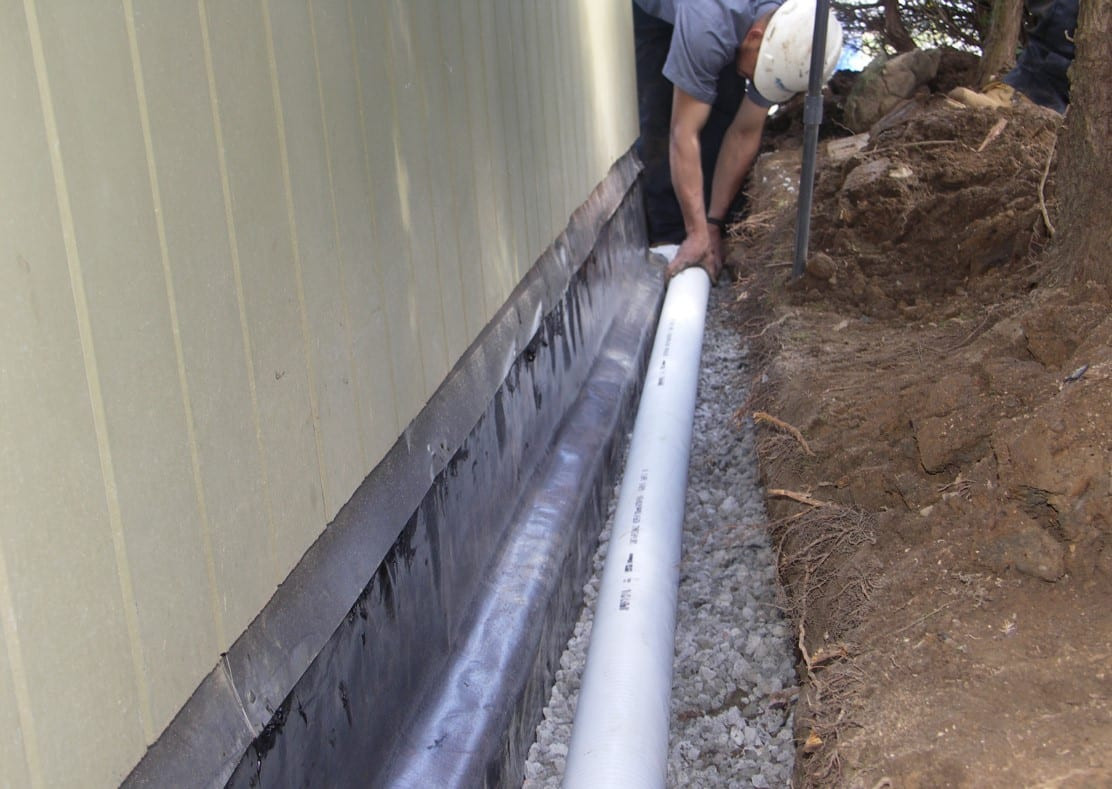
French drains and proper grading work together to move water away from your foundation. A French drain uses a perforated pipe in a gravel trench to collect and carry water offsite, while grading makes sure the soil slopes away from the house so water won’t pool at the foundation.
How Do Gutters and Downspouts Impact Basement Water Management?
Gutters channel roof runoff; downspouts carry it away from the foundation. If gutters fill with debris or downspouts dump next to the foundation, roof water becomes a major source of basement intrusion. Simple upkeep—cleaning and extending downspouts—often solves what looks like a complex problem.
What Interior Drainage Systems Help Mitigate Basement Waterproofing Failures?
Interior drainage is a reliable backstop when exterior options can’t fully control the water table. These systems collect water that reaches the basement and move it out before it causes damage.
How Do Sump Pumps and Interior Drain Tiles Work to Remove Water?
Sump pumps sit in a pit and eject collected water away from the house when levels rise. Interior drain tiles (installed at the perimeter of the basement floor) gather seepage and channel it to the sump pit. Together they keep water moving away from the living space instead of letting it pool.
When Is Interior Perimeter Drainage Necessary for Basement Protection?
Interior perimeter drainage is recommended when exterior drainage can’t fully control groundwater—common in high water-table areas or where soil drains poorly. It’s a proactive measure to capture water that slips past exterior defenses and get it out quickly.
Why Is Proper Drainage Design Critical to Managing Hydrostatic Pressure?
Drainage reduces the water level around the foundation and so lowers the hydrostatic pressure that pushes on walls and floors. Good drainage design treats the cause, not just the symptom.
How Does Drainage Reduce Hydrostatic Pressure on Foundation Walls?
By directing groundwater away and lowering the local water table, drainage systems relieve the pressure that forces moisture through cracks and seams. Less pressure means less chance of intrusion and longer-lasting waterproofing.
What Design Principles Ensure Effective Water Diversion Around Foundations?
Key principles include consistent grading away from the house, well-placed French drains, reliable downspout extensions, and selecting durable materials for membranes and piping. A system designed around the property’s soil type and water table performs far better than a one-size-fits-all approach.
What Preventative Measures and Maintenance Practices Extend Basement Waterproofing Life?
 Routine care keeps small problems from becoming expensive failures. Most waterproofing issues are preventable with a few straightforward checks and repairs.
What Are Key Maintenance Tasks for Drainage Systems and Waterproofing?
Keep gutters clear, make sure downspouts discharge at least several feet from the foundation, inspect exterior drains for blockages, and check waterproofing membranes and interior drain outlets for signs of wear. Address cracks or damaged seals promptly to stop leaks before they spread.
How Often Should Homeowners Inspect and Maintain Basement Drainage?
Inspect drainage and waterproofing at least twice a year—spring and fall are ideal—and after any heavy storms or rapid snowmelt. Regular checks catch issues early when repairs are faster and less costly.
When Should You Consult Professionals for Basement Waterproofing and Drainage Issues?
Some problems are best handled by experienced contractors. Calling a professional early can prevent repeated repairs and protect your home’s value.
What Signs Indicate Professional Assessment Is Needed?
Call a pro if you have recurring leaks, visible mold, persistent musty odors, or standing water near the foundation. These are signals that the existing system isn’t coping and needs a tailored solution.
How Do Experts Design and Install Effective Drainage Systems?
Experienced contractors evaluate site conditions—soil type, slope, water table, and building details—then recommend a mix of exterior grading, French drains, interior perimeter systems, and sump pumps as needed. They size and place components to work together and meet local code requirements.
| Drainage Solution | Description | Benefits |
|---|---|---|
| French Drains | Perforated pipes laid in gravel to collect and redirect groundwater away from the foundation | Prevents water buildup at the foundation line and lowers hydrostatic pressure |
| Sump Pumps | Electric pumps that eject collected water from a sump pit to a safe discharge point | Removes water before it floods the basement and manages rising groundwater |
| Interior Drain Tiles | Pipes installed around the perimeter of the basement floor to capture seepage and feed the sump | Directs incoming water to a pump for quick removal and protects finished spaces |
Understanding why waterproofing fails—and designing drainage to address the root causes—keeps basements dry and systems lasting longer. Prioritize proper grading, functional gutters, and the right mix of exterior and interior drains. When in doubt, have a trusted professional assess your property so you get a durable, effective solution instead of a temporary fix.

Contact Information:
A.M. Shield Waterproofing Corp.
33 Albertson Ave
Albertson, NY 11507
United States
Hugo D'Esposito
(516) 294-8400
https://amshieldcorp.com/
