Cumming, GA, March 20, 2026 (GLOBE NEWSWIRE) -- As spring and early summer bring more people outdoors for hiking, camping, park visits, and weekend travel, iSpring has released a new outdoor water safety guide aimed at helping beginners make safer hydration decisions in natural settings. Through its new beginner-focused outdoor water safety guide, the company shows how everyday adventurers can make smarter hydration choices with a few easy habits and a compact solution like the iSpring IFS-B Personal Water Filter Straw.
At home, clean drinking water is effortless. Outdoors, it can feel uncertain, especially for first-time hikers and campers who may wonder whether a stream is safe, whether boiling is enough, or whether they need bulky filtration systems. iSpring’s new guide is designed to remove that uncertainty by breaking outdoor water safety into practical, memorable steps that are easy to follow.
The guide begins with one of the most important principles of outdoor hydration: choosing a better water source whenever possible. While no natural water source should be assumed safe without treatment, beginners can reduce risk by looking for flowing water instead of stagnant water, collecting from areas upstream and away from campsites or livestock, and avoiding water that is cloudy, muddy, or foul-smelling.
To simplify the process further, the guide recommends a four-step framework: Look → Filter → (Optional) Boil → Drink
Let’s break that down.
- Look
Start by choosing the best source available using the guidelines above, avoiding water that looks visibly dirty, stagnant, or suspicious. If it smells bad or appears heavily polluted, it’s best to move on and find a better source. This quick decision step already reduces a lot of potential risk.
- Filter
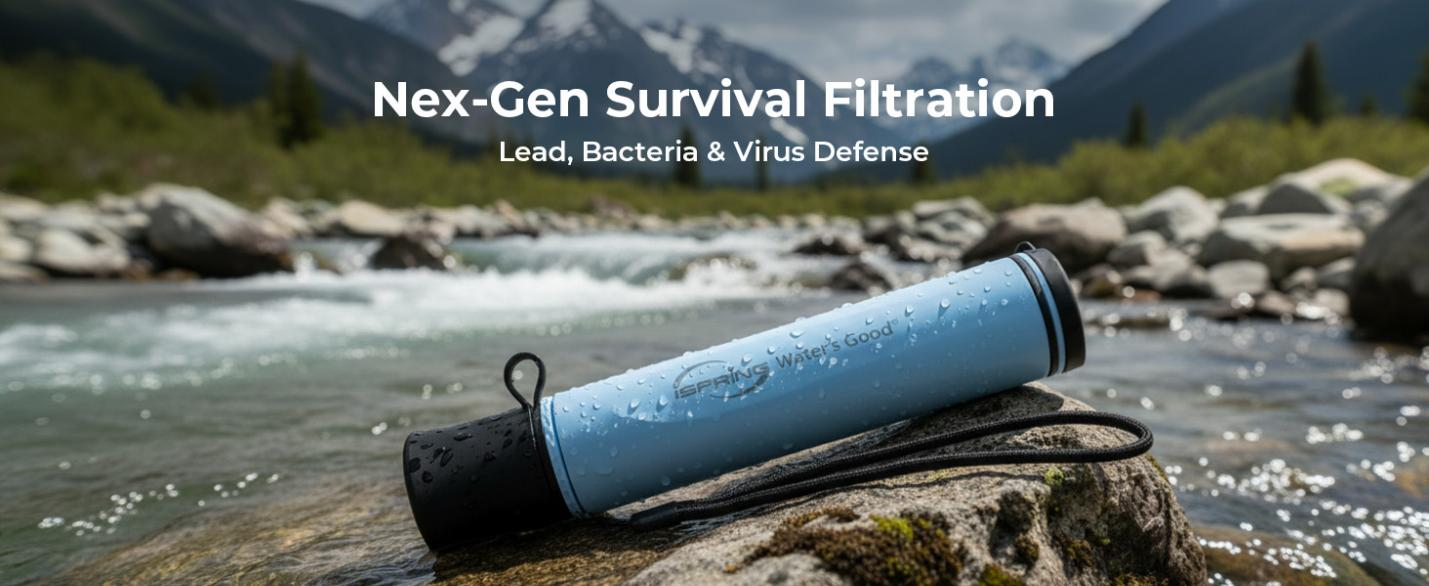
The next step is filtration. A portable filter straw - the iSpring IFS-B Personal Water Filter Straw can act as a simple first line of defense when drinking from natural sources.
A filter straw helps reduce things like:
- sediment and small particles
- micro-organisms such as viruses and bacteria
- other contaminants that may affect safety or taste
The iSpring IFS-B Personal Water Filter Straw uses a dual-layer electropositive membrane, which works a bit like a charged surface that attracts and traps extremely small contaminants, including viruses, bacteria, and lead. In addition, the built-in CTO carbon block helps reduce odors and improve the taste of water from natural sources.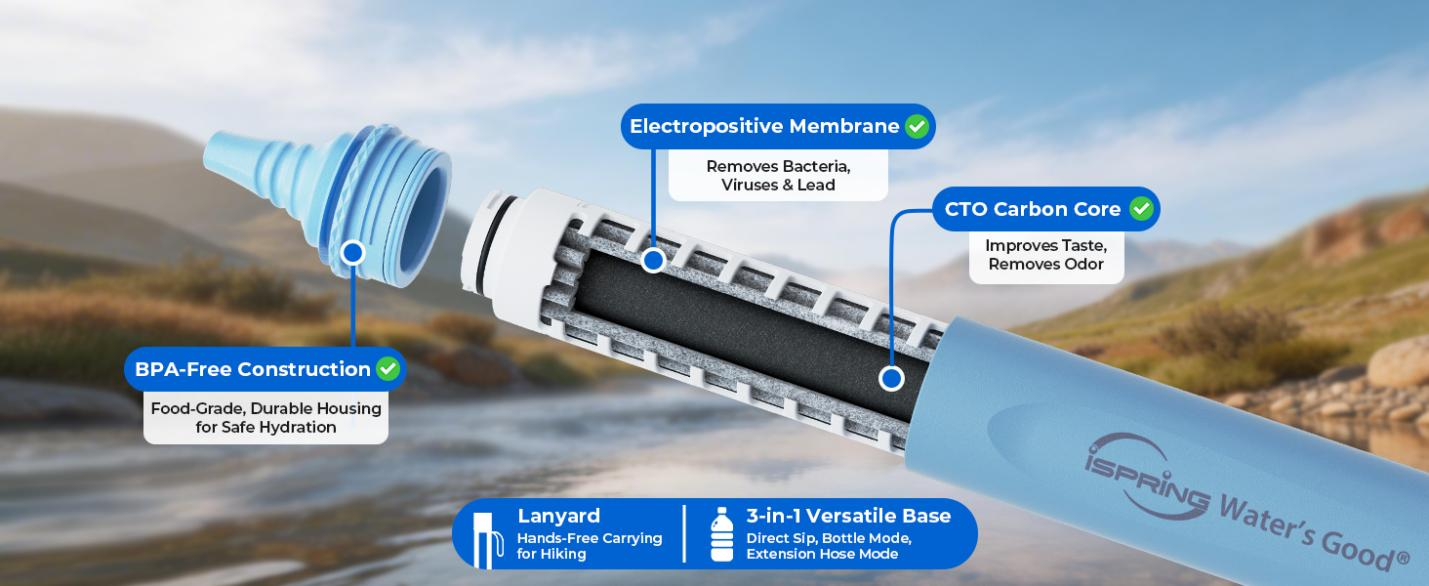
The system has also been independently tested by SGS, verifying its ability to reduce up to 99.9999% of bacteria under controlled lab conditions. In simple terms, filtering water before you drink it makes a huge difference for most casual outdoor situations.
- Boil (When It Makes Sense)
Boiling water is another traditional method used outdoors. You don’t always need to boil water if you’re using a reliable filter, but it can add extra reassurance in certain situations, especially when cooking at camp.
A common approach is: filter first, then boil. This method helps remove particles and contaminants before heating the water, which can improve both safety and taste.
It’s especially helpful when making coffee or tea, instant noodles, soup or pasta, hot drinks on chilly evenings. Think of boiling as an extra step when it’s convenient, not something that has to happen every time. If you remember to choose wisely, filter first, and boil when you can, you’re already ahead of many beginners.
You Don’t Always Need a Big Water System: When a Filter Straw Makes the Most Sense
When people first start researching outdoor water solutions, they often assume they need a large, complicated filtration setup. But for many trips, that’s simply not necessary.
A filter straw is often the perfect tool for situations like:
- day hikes where weight matters
- weekend camping trips
- exploring areas where you may pass streams or lakes
- traveling light but wanting a backup option for uncertain taps
Instead of carrying three or four heavy bottles “just in case,” you can bring a single bottle and refill when needed.
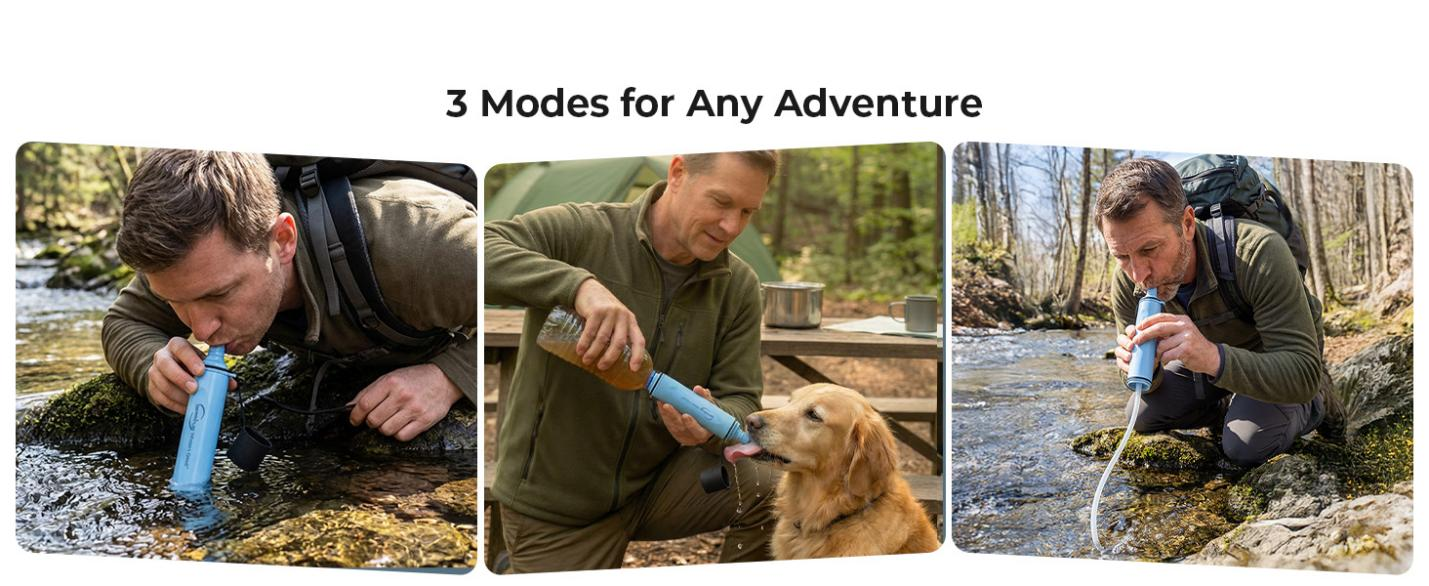
At just 3.5 ounces, the iSpring IFS-B Personal Water Filter Straw fits easily into a backpack pocket and works in multiple ways:
- allows you to drink directly from a water source
- easily attach it to a standard bottle to create a squeeze system
- use the included extension hose to reach water more easily
Think of a filter straw as a pocket-sized safety net for your water.
One Tiny Straw, A Lot Less Worry
The idea behind the iSpring IFS-B Personal Water Filter Straw is simple: make outdoor hydration easier without adding complexity. The straw’s electropositive filtration membrane helps capture extremely small contaminants such as viruses, bacteria, and lead, while the solid CTO carbon block improves taste by reducing odors and chemicals.
Because the filter is washable and reusable, it’s easy to rinse and dry after a trip. And when the filter reaches its lifespan, about 132 gallons (500 liters), you can simply replace the internal filter core instead of throwing away the entire straw.
It’s a straightforward design meant to keep outdoor gear practical and sustainable.
Start Simple, Go Further
Managing drinking water outdoors doesn’t require complicated systems or survival training.
You just need a few simple habits:
- choose better water sources
- filter before drinking
- boil when cooking or when you want extra reassurance
That’s it.
Next time you plan a hike, picnic, or camping weekend, consider adding a filter straw to your packing list because safe drinking water outdoors doesn’t have to be complicated. With a little knowledge, and a small tool like the iSpring IFS-B Personal Water Filter Straw in your pocket, you’re ready to go.

Nick Lawson
support@ispringfilter.com